
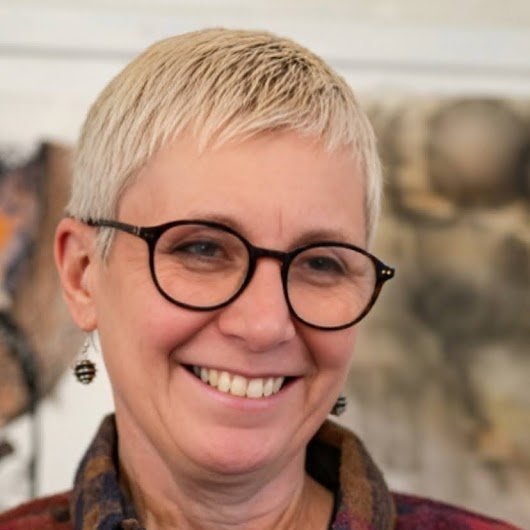
Q: Tell us about yourself and your practise?
I am a multidisciplinary artist focused on integrating augmented reality (AR) into my work, particularly within the context of environment and climate change.
My artistic practice combines visual aesthetics and interactive technology to create immersive experiences. Combining my own offline responses in traditional mediums with local history and cultural experiences on site, is often unpredictable, exciting and demanding.
Collaboration is at the heart of my practice. I have worked with researchers and musicians to explore the human visceral response to the world around us. Engaging with viewers, participants and collaborators reveals a multitude of interpretations and creates a dialogue that my work continues to respond to.
One of my key aims is to democratize art using tools like Artivive, a free app that makes AR accessible through smartphones. This approach removes the barriers of “fine art” by allowing viewers to engage directly with the work, placing them at the heart of the interaction. I believe in the restorative power of art and strive to foster connection with one’s surroundings through the use of Augmented Reality.
Q: What is augmented reality and how does it work?
Augmented Reality is a technology that overlays digital information such as images, sounds, and 3D models onto the real world in real-time. This blending enhances the user’s perception of their environment. AR works by using devices like smartphones, tablets, or AR glasses equipped with cameras and sensors to detect the physical surroundings. In this case viewers firstly will download the Artivive App and then point their devices at a trigger image on a publicly accessible post, software processes the captured data and generates digital content for the viewer to watch and record for ten seconds with live surroundings and even people within the frame.
AR can be utilized for various applications, from gaming and education to art installations and healthcare. Its potential lies in enhancing engagement, providing new perspectives, and fostering meaningful interactions between users and their environment.
Some of the AR content is created using Virtual Reality (VR), where I design 3D scenes that are later integrated into AR. I discovered this possibility during lockdown when I won a Graduate Scholarship in 2020 with The University of Salford Art Collection’s Graduate Scholarship Programme. I was searching for an infinite studio to feel free to create abstract representations within a small space and discovered I could do this in Open Brush amongst other VR programs.
Q: What will we be creating for the living report?
During a recent AR project Immersive Watergrove I demonstrated the use of AR to Public Health Specialist Dianne Gardner at Rochdale Health and Wellbeing. As we walked and talked, Dianne explained how Public Health Rochdale had worked with artists before to create a unique book version of what would normally be a numerous page report that would sit on a shelf. We discussed how using an Augmented Reality method of engaging with the viewer would mean that more people can benefit from this type of inspiring experience. In short, the results of the report into local community health and activities could be showcased with visuals and sounds in an interactive exciting way that reaches right to the heart of that community.
For the Living Report, we’re designing five interactive digital boards, each located in one of Rochdale’s five townships. These installations will inform and engage residents about local activities that promote mental and physical health, such as outdoor events, community walking groups, and niche local hobby groups. The boards will feature co-created films showcasing personal stories from local residents who’ve benefited from these activities, bringing their experiences to life. The goal is to inspire more people to get involved and feel a deeper connection to their community. A Breaking Barriers team, led by Kirstie and Toby, is working closely with residents to capture these stories. By integrating AR, the boards will provide a dynamic, interactive way for people to experience and connect with these initiatives, making the report’s findings more accessible and engaging to the public at the heart of their community.
- How do you hope people will feel when they experience the piece?
I hope people feel a sense of connection and curiosity when interacting with the augmented reality experience. The immersive nature of AR can create a momentary escape, inviting viewers to step outside of their daily stresses and engage more deeply with their surroundings. My goal is for the piece to spark curiosity about local events and spaces, encouraging people to explore and get involved in community activities. I also want viewers to feel emotionally validated, knowing that their personal experiences and feelings are shared by others. Through these interactive elements, I aim to empower participants, helping them to see the value of mental and physical well-being. Ideally, this experience will encourage people to carry a renewed sense of connection and awareness of their health beyond the installation, fostering more meaningful interactions with their environment.
- Why do you think green spaces are important?
Green spaces play a crucial role in supporting mental and physical health. They offer a break from the noise and chaos of urban life, providing a peaceful setting for relaxation and reflection. Numerous studies show that time spent in nature reduces stress, anxiety, and depression while promoting overall emotional well-being. Green spaces also encourage physical activity, whether through walking, jogging, or organized events, helping people lead healthier lives. In addition to these personal benefits, green spaces strengthen community bonds by offering areas for social interaction and cultural events. They are also ecological havens, supporting biodiversity and contributing to environmental sustainability. Through my AR work at reservoirs with musician Sophie Cooper, I’ve witnessed how green spaces surprise and inspire participants, creating moments of joy and reflection. These spaces are essential for fostering a balanced, resilient community that values both health and environmental well-being.